Since ancient times, the dimensions of time, space, and speed that humans have been familiar with in every day’s life are extremely limited compared to what the Universe offers. With this limitation, humans have been living on the Earth for millions of years. The development of physics in the past four hundred years has broken through these limitations, allowing humans to peer into, and further appreciate, the mysteries of the universe, both the largest and smallest, in space and time. As long as a person is interested, there is so much new knowledge about the universe which, of course, cannot be easily used to earn a living, raise a family or make a fortune. The body of knowledge on the Universe is so huge and is readily accessible via the Internet. It is just right for those of us who are interested in this field and no longer have the pressure to support our family, i.e., the retirees.
When it comes to the Universe, we must talk about time and distance. The concept of time in our minds is usually hours, days, weeks. A person’s lifespan, which is usually less than one hundred years, is considered a long time. If you travel around the world, such as visiting the pyramids of Egypt, Pompeii, Italy, and Mexico’s ruins of Maya, you will think these cultures, being in existence thousands of years ago, are quite old. But if you push back further, 300,000 years ago, modern humans appeared, 230 million years ago, dinosaurs appeared, and 3.9 billion years ago, single-celled organisms began to exist on the Earth, 4.5 billion years ago, the earth was born, 4.6 billion years ago, the sun was born, 13 billion years ago, the Milky Way was born, 13.8 billion years ago, the universe was born (i.e., The Big Bang). It is difficult for our little minds to imagine this enormous time span of 13.8 billion years that have elapsed for our Universe!
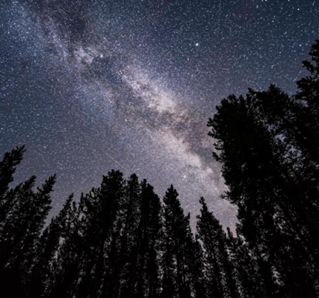
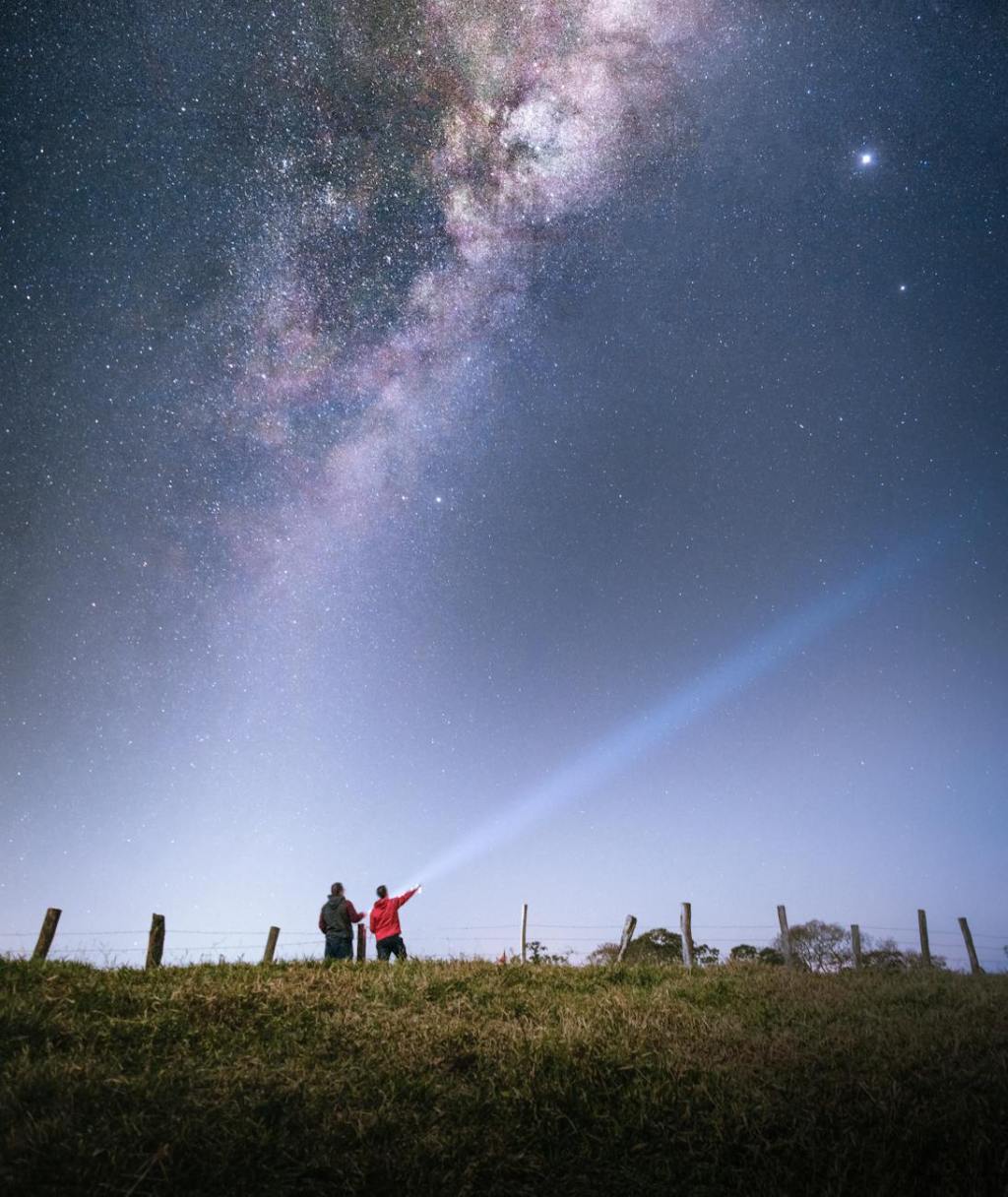
Next, let us talk about the size of the Universe. When it comes to the distance of the Universe, we usually express it in terms of the time it takes for the speed of light to travel. How fast is the speed of light? When we were in junior high school, we all read that light can circle the Earth seven and a half times in one second. The distance from the Earth to the Moon, traveling at the speed of light, would take 1.3 seconds. The distance from the Earth to the Sun, traveling at the speed of light, would take 8 minutes and 20 seconds. We have never been able to know what is happening to the sun now; all we can know and see is what happened 8 minutes ago. The “eternal sun” that humans have praised since ancient times is the nearest star to us. The next nearest star to us is called Proxima Centauri, located in the southern constellation Centauri; it would take 4.24 years to reach at the speed of light; we call this distance 4.24 light years. The brightest star visible to the naked eye in the sky is Sirius, which is 9 light years away. Polaris, the North Star in the constellation Ursa Minor, is 323 light-years away. These stars are still in the Milky Way (Figure 1) that we can see when we look up at night. Our Milky Way alone has 100 billion stars. The large galaxy next to us is called “Andromeda”, with one trillion stars. This “Andromeda” is 2.5 million light-years away from us. The distance is astonishing. Recently, the James Webb Space Telescope discovered a galaxy called GLASS-z13, which is 13.5 billion light-years away from us, which is even more unimaginable.
Is the universe eternal or is it expanding? From Ptolemy, Copernicus, Galileo, Newton, to the young Einstein, these extremely intelligent people spanning more than 2,000 years all believe that the universe is eternal, infinite in space and infinite in time. Furthermore, time and space are independent of each other, and cannot mingle together. It was not until 1887 that experiments proved that the speed of light does not change regardless of whether the light source is moving or not. This is quite different from our understanding of addition of speeds. This triggered young Einstein to come up with the theory of relativity. In 1905, he proposed the epoch-making concept that “time and space are actually inseparable and is one single entity”, which subverts our ordinary people’s views on time and space. In 1929, Edwin Hubble, in California, used the best telescope at the time to study galaxies and discovered that galaxies are all moving away from us, and the faster it is leaving the farther away the galaxies. This shows that the Universe is expanding, and there is nothing eternal at all about the Universe. This greatly disrupts ordinary people’s view of the Universe.
Dark matter and dark energy: Dark matter is a substance that does not interact with electromagnetic force but only with gravity. Because light is an electromagnetic wave, dark matter does not absorb, reflect, or emit light. We cannot see these things and can only detect their existence by gravity. Dark matter accounts for 26% of the total mass of the Universe. Scientists predict the existence of dark matter because if there were no dark matter to provide extra attraction, the stars in the galaxy would have all flown away long ago. Dark energy is different. It has the characteristics of anti-gravity, i.e., it exerts repulsive force. It accounts for 70% of the total mass of the Universe. Without dark energy, the Universe cannot expand which is contrary to what Edwin Hubble had observed. Dark matter and dark energy, two things that we do not understand well, together account for 96% of the Universe, and the remaining 4% is the Universe that we can see, i.e., the total mass of trillions of galaxies is only 4% of the Universe. We humans are not only small but also know truly little.
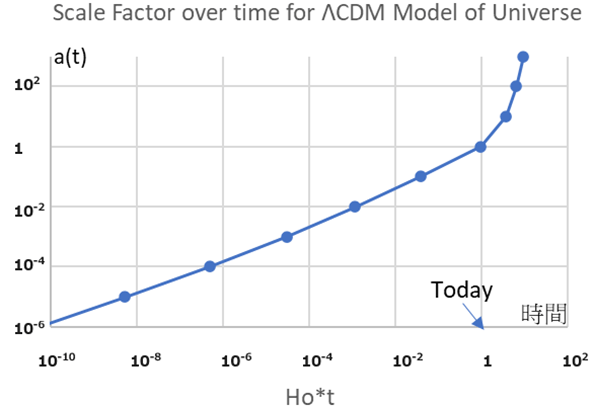
Universe and life: In the past, we humans always thought that we were the center of the Universe, and that all the stars in the sky revolved around our Earth. Later, we also said that the Sun was the center of the Universe. Now we know that our Sun is not the center of the Universe. Our solar system is on an inconspicuous rotating arm of an inconspicuous galaxy called Milky Way, which is but one among the two trillion galaxies in the Universe. The evolution of the Universe actually does not care if human beings exist or not, but the 4% of the basic raw materials, environment and processes of the Universe have magically created human lives on the Earth. So, there are you and me today on the earth, as well as all things with flourishing lives and extraordinary beauty. As a member of the Universe, human beings can further accumulate enough wisdom to explore the Universe with macroscopic thinking of time and space, the origin of Universe, its future, and the significance, if any, of its existence. Various signs show that the Universe continues to expand, making the size of the Universe larger and larger, and the material density of the Universe becoming smaller and smaller, while the dark energy density of the universe is independent of the size of the Universe. This means that in the future, dark energy with repulsive force will increasingly become the dominant player in the evolution of the Universe, overriding the effect of the attractive force of gravity provided by matter. Because of this, the currently expanding Universe will continue to expand (see Figure 2 which shows the scale factor, a(t), of the Universe over time under the ΛCDM model for the Universe), all galaxies will move away from us and disappear without a trace, even our own Milky Way galaxy will fall apart, and even all the stars will be torn apart, and atoms, electrons and nuclei will all be separated. This is an extremely bleak ending. This ending is far worse than the Heaven or the Buddhist Paradise. Although the ending predicted by this kind of cosmology will only happen in the very distant future, humans cannot help but wonder why the Universe is destined to evolve like this and what is the meaning. Steven Weinberg, the 1979 Nobel Prize winner in physics, once said in his famous book describing the Universe — The First Three Minutes, that “The more the Universe seems comprehensible, the more it also seems pointless”, that is, as we learn more about the Universe, the overall evolution of the Universe seems less and less meaningful. The Creator, if there is one, seems to have no purpose when creating the Universe. While viewed from the macroscopic scale, the Universe seems to be meaningless, yet on the microscopic scale of the tiny space and time in which we humans exist, the flourishing of life, the interaction between human beings, and the progress of scientific and technological achievement contain incomparable richness and beauty for human life; there is no basic contradiction between the macroscopic meaninglessness and the microscopic richness and meaning. After all, the microscopic dimensions of space and time are indeed insignificant from the macroscopic perspective of the Universe, whatever we have created and achieved, including the accumulation of human knowledge in cosmology itself, will disappear without a trace under the giant wheel of the Universe. Such a brief time and space with brilliant significance, like our civilization, should not happen just once in the vast Universe. However, even if an advanced civilization exists in some corner of the Universe in the past or occurs in some other corner of the Universe in the future, it cannot shake the direction of the Universe toward an extremely bleak ending.
Conclusion: This short article explores the evolution of the Universe and how our human life fits in. Simply put, the evolution of the Universe does not have a fixed meaning. The emergence of human beings is also random. The progress of human civilization and technology on Earth seems to be continuous in a brief period of time. The Earth moves forward, but the birth of the star (e.g., the Sun) and its destruction when the fuel is exhausted, will turn our Earth into cosmic dust, and then the dust will condense into stars and planets. This shows that everything is just a cycle, everything is going back to square one and repeating. Therefore, the various achievements we humans have made, and the meanings these achievements represent, will be short-lived and not eternal. However, this small spacetime is the entire existence of human beings and is what our lives are tied to. And the meaning of life is subjective. Whether a person wants to be positive and live a life of achievement, or whether he lives a life of negativity and decadence can only depend on his own mind. As Confucius said, “Does Heaven have to say anything? The four seasons just advance among themselves, and everything just comes into being. Does Heaven have to say anything? ” Whatever you do in your life, would Heaven really care? (2024-02 NJ)

 Astronodome
Leave a comment